

JOIN THE PAWFECT JOURNEY NEWSLETTER
Get our best pet care tips, product picks, and deals sent straight to your inbox. It is free.
Subscribe FreeWhy do cats knead? Cats knead because it is a comforting, instinctive behavior left over from kittenhood, when they pressed their paws against their mother to help milk flow. As adults, cats knead soft surfaces like blankets, pillows, and your lap to show contentment, mark their scent, and settle into a cozy spot. It is almost always a happy, healthy sign.
If you have ever watched your cat rhythmically push its front paws in and out against a blanket, you have seen kneading in action. This quirky habit is one of the most endearing things cats do, and there is a lot of sweet meaning packed into it. Below we break down what kneading is, the main reasons cats knead, and how to enjoy the behavior without getting scratched.
What Is Kneading, or “Making Biscuits”?
Kneading is when a cat pushes its front paws down and forward against a soft surface, one paw after the other, in a slow rhythm. Some cats use only their front paws, while others get all four working. People often call it “making biscuits” because the motion looks just like a baker pressing dough. Many cats purr, drool, or get a dreamy half-closed look while they do it, which is a strong clue that they feel safe and relaxed.
RELATED: 11 Best Cat Toys for Indoor Cats
Why Do Cats Knead? 6 Common Reasons
There is no single answer to why cats knead. Most experts point to a mix of instinct, comfort, and communication. Here are the six reasons that come up most often.
- Leftover kitten instinct. Nursing kittens knead their mother’s belly to stimulate milk flow. That early association between kneading and warmth, food, and safety often stays with cats for life, so they knead again whenever they feel content.
- Comfort and relaxation. Kneading releases feel-good signals and helps a cat unwind. A cat that kneads your lap while purring is telling you it feels completely at ease.
- Marking their territory. Cats have scent glands in the soft pads of their paws. When they knead a blanket or your leg, they leave behind a personal scent that quietly says “this is mine.”
- Building a cozy nest. Wild cats patted down grass and leaves to create a soft, safe place to rest or give birth. Domestic cats keep the habit, kneading a cushion or bed to make it just right before curling up.
- Showing affection and bonding. Many cats knead the people they trust most. If your cat climbs onto your chest and starts making biscuits, take it as a genuine compliment.
- A natural stretch, or a sign of heat. Kneading gently works a cat’s paws and muscles like a stretch. Unspayed female cats may also knead more often when they are in heat, as part of their mating signals.
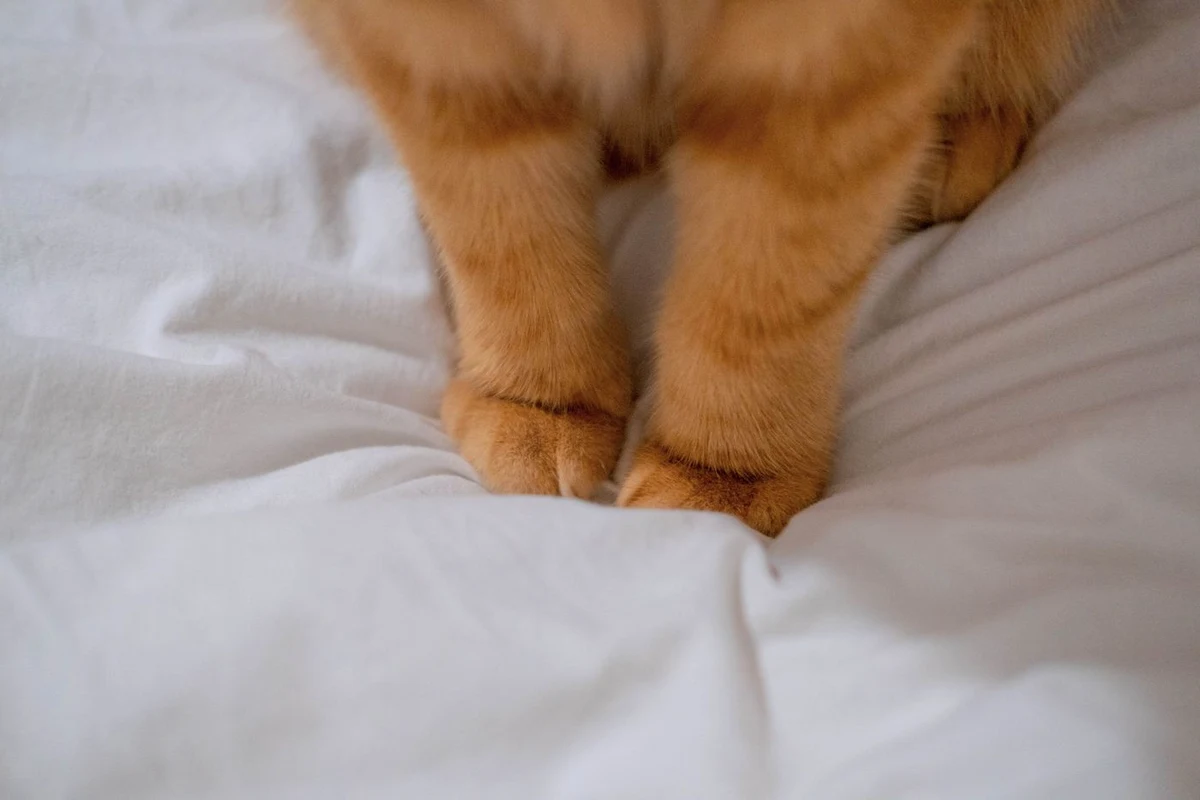
Why Does My Cat Knead Me Specifically?
When a cat kneads you, it usually means you are its safe place. Your warmth and familiar scent remind your cat of the comfort it felt as a kitten, so your lap becomes the perfect spot to relax and mark as home turf. It is one of the clearest signs that your cat feels bonded to you. The only downside is the claws, which brings us to the practical side of kneading.
RELATED: 13 Questions to Ask Yourself Before Adopting a Cat
Is Kneading Ever a Problem?
Kneading itself is normal and healthy, so there is rarely any reason to worry. That said, pay attention if the behavior suddenly changes. Frantic, nonstop kneading paired with pacing, restlessness, or loud vocalizing can signal stress or, in unspayed females, heat. If your cat also seems to be in pain, is limping, or is over grooming its paws, check in with your veterinarian, since sore pads or claws can make normal movements uncomfortable. For everyday kneading, though, the behavior is simply your cat being happy.
How to Handle Kneading Without the Claws
You never want to punish or scold a cat for kneading, because it is a natural comfort behavior and punishment only creates anxiety. Instead, make it more comfortable for both of you with a few simple steps:
- Keep claws trimmed. Regular nail trims dull the sharp tips so kneading on your lap does not hurt.
- Lay down a barrier. Keep a thick blanket or folded towel nearby and slide it onto your lap when your cat settles in to knead.
- Redirect to a better surface. Encourage kneading and scratching on a plush cat bed or a sturdy cat scratcher instead of your skin.
- Gently reposition. If the claws come out, calmly move your cat to a soft cushion rather than pushing it away.
RELATED: How to Safely Introduce Cats to Other Pets
Frequently Asked Questions
Do all cats knead?
No. Kneading is very common, but not every cat does it, and that is perfectly normal. Some cats knead constantly, others only now and then, and a few never pick up the habit at all. It often depends on personality and early experiences as a kitten.
Do cats knead when they are happy?
Usually, yes. Kneading is most often a sign of comfort and contentment, especially when it comes with purring and relaxed body language. In rare cases it can signal stress or heat, so it helps to look at the whole picture of your cat’s mood and behavior.
Should I stop my cat from kneading?
There is no need to stop it. Kneading is healthy and natural, and the experts who study cat behavior agree it is a positive sign. If the claws bother you, trim the nails and use a blanket rather than discouraging the behavior itself.
Kneading is one of those small, everyday reminders that your cat feels safe, loved, and right at home. The next time your cat starts making biscuits on your lap, you will know exactly what that cozy little rhythm means.
Author

Shopping for your pet on Amazon? New members can sign up for a free trial of Prime for fast free shipping and member-only deals, and cancel anytime.
Sign Up for a Free Trial of Prime


