

JOIN THE PAWFECT JOURNEY NEWSLETTER
Get our best pet care tips, product picks, and deals sent straight to your inbox. It is free.
Subscribe FreeIf you just brought home a parakeet, one of the first questions you will ask is a simple one: what do parakeets eat? The short answer is that a healthy parakeet diet is built around fortified pellets, plenty of fresh vegetables, a little fruit, and only a small amount of seed. Get that balance right and you set your bird up for a long, active life.
Parakeets, also called budgerigars or budgies, are small and love to eat, which makes them easy to overfeed and easy to spoil with the wrong foods. This guide breaks down exactly what belongs in the food dish, what to skip, and how much to serve each day.
What Do Parakeets Eat? The Quick Answer
A balanced daily diet for a pet parakeet looks like this:
- Pellets: roughly 60 to 80 percent of the diet, as the everyday base.
- Vegetables and fruit: about 20 to 25 percent, with vegetables doing most of the work and fruit as a smaller treat.
- Seeds: a small portion only, offered as a treat rather than a meal.
- Fresh water: clean water available at all times, changed daily.
Veterinary nutritionists at VCA Animal Hospitals stress that budgies are prone to obesity and iodine deficiency, so variety and portion control matter more than most new owners expect.
Pellets: The Foundation of a Parakeet Diet
A quality pelleted food made for small birds is the healthiest everyday base for a parakeet. Pellets are formulated to cover most of a bird’s nutritional needs in every bite, so your parakeet cannot pick around them the way it picks favorites out of a seed mix. Pellets should make up about 60 to 80 percent of what your bird eats.
If your parakeet was raised on seed, switching to pellets can take days, weeks, or even months. Offer pellets first thing in the morning when your bird is hungriest, sprinkle them on a flat surface so your bird can forage the way it would on the ground, or grind them over a moist food your bird already likes. Go slowly and never starve a bird into eating a new food.
Seeds: A Treat, Not the Whole Meal
Seeds are where most parakeet diets go wrong. A plain seed mix is high in fat, low in protein, and short on the vitamins and minerals a bird needs. Parakeets also tend to eat only their one or two favorite seeds and leave the rest, which makes an all-seed diet even less balanced than it looks.
Millet spray is a classic parakeet favorite, but it is still a nutrient-poor treat, so offer it only in small amounts a couple of times a month. Skip honey sticks, which are mostly seeds glued together with sugar. Think of seeds as the equivalent of candy: fine in small doses, never the main course.
RELATED: Can Birds Eat Pumpkin Seeds? What’s Safe and How to Serve Them
Fresh Vegetables and Fruit
Fresh produce should account for about 20 to 25 percent of the daily diet, and vegetables should do most of that work. Dark leafy greens and colorful vegetables pack the most nutrition, while pale, watery choices like iceberg lettuce and celery offer very little.
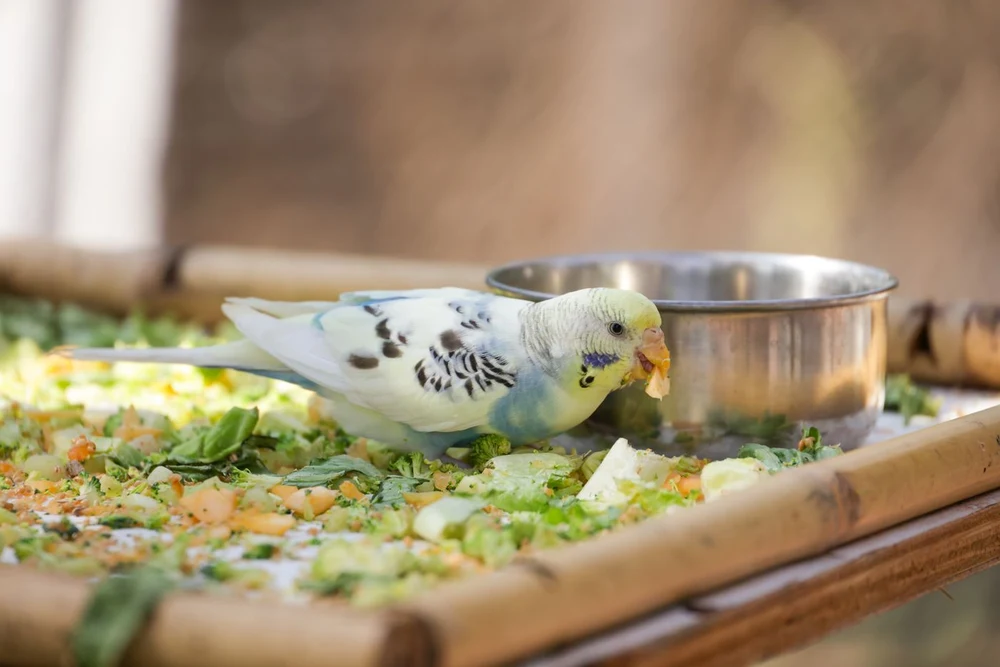
Parakeet-safe vegetables and fruits include:
- Vegetables: broccoli, kale, spinach, carrot and carrot tops, bell peppers, squash, sweet potato, peas, zucchini, and cucumber.
- Fruits: apple, banana, berries, melon, mango, pear, and grapes, all in small pieces.
Wash everything well, cut it into bird-sized pieces, and serve it in a separate dish. Remove fresh food after a couple of hours so it does not spoil, especially in warm weather.
RELATED: Can Parakeets Eat Bananas?
What Do Wild Parakeets Eat?
Pet parakeets are budgerigars, a species that comes from the grasslands of Australia. In the wild, budgies feed on or near the ground, eating a changing menu of grass seeds, plants, fruits, and berries depending on what is in season. That natural grazing habit is why foraging tricks work so well when you are teaching a pet bird to try new foods at home.
Foods to Never Feed a Parakeet
Some everyday foods are genuinely dangerous for a small bird. Never feed your parakeet:
- Avocado, which is reported to be toxic to birds.
- Chocolate and anything with caffeine, such as coffee, tea, and soda.
- Alcohol.
- Very salty foods like chips, pretzels, and popcorn.
- Processed foods and anything cooked in butter or oil.
Dairy should only be offered in tiny amounts, since birds are lactose intolerant. Parakeets also do not need grit or gravel. Because they hull their seeds before swallowing, they digest fine without it, and some budgies will overeat grit and develop a dangerous blockage.
RELATED: 10 Foods You Should Never Feed Your Pet Bird
How Much and How Often to Feed a Parakeet
Keep fresh pellets available throughout the day and refresh the vegetables and fruit once daily. A helpful rule of thumb from avian vets is that a thumbnail-sized portion of human food for a parakeet is like a full dinner plate for a person, so keep treats tiny. Clean and refill the water daily, and wash food and water dishes with soap and water so bacteria do not build up.
If your parakeet is very young, molting, laying eggs, or recovering from illness, its needs can shift, so check in with an avian veterinarian about any special diet.
Frequently Asked Questions
Can parakeets live on seeds alone?
No. An all-seed diet is too high in fat and too low in vitamins, minerals, and protein, and over time it can shorten a parakeet’s life. Seeds should be a small treat, with pellets and fresh produce making up the bulk of the diet.
Do parakeets need grit?
No. Parakeets remove the outer hull before swallowing a seed, so they do not need grit to digest their food. Offering grit can actually cause a life-threatening blockage if a bird overeats it.
How much should I feed my parakeet each day?
Keep pellets available all day and offer a small daily serving of vegetables and fruit, aiming for pellets at about 60 to 80 percent of the diet and produce at about 20 to 25 percent. Treats like millet should stay tiny and occasional.
What vegetables can parakeets eat?
Good choices include broccoli, kale, spinach, carrot and carrot tops, bell peppers, squash, sweet potato, peas, and zucchini. Skip watery, low-nutrient options like iceberg lettuce and celery.
Can parakeets eat fruit every day?
A little fruit each day is fine as part of the 20 to 25 percent produce portion, but keep it smaller than the vegetable share because fruit is higher in sugar. Always serve it fresh, washed, and in small pieces.
The Bottom Line
A parakeet thrives on a base of fortified pellets, a daily helping of fresh vegetables with a little fruit, only a small amount of seed, and clean water at all times. Steer clear of avocado, chocolate, caffeine, salt, and alcohol, skip the grit, and keep portions small. Build those habits early and your budgie will stay bright, active, and healthy for years.
Author

Shopping for your pet on Amazon? New members can sign up for a free trial of Prime for fast free shipping and member-only deals, and cancel anytime.
Sign Up for a Free Trial of Prime


