


PRIME BIG DEAL DAYS IS OCTOBER 6 TO 7
Prime members get the sale prices, plus fast free shipping on food, litter, and pet gear. New to Prime? Try it free.
Start Your Free Prime TrialA dog weight chart gives you a healthy target range based on your dog’s size class or breed, and it is the fastest way to find out whether your dog is drifting into overweight territory. The short version: most adult dogs are considered overweight once they sit 10 percent above their ideal weight, and obese once they pass 20 percent. For a 40 pound dog, that means an extra 4 pounds already counts.
The chart below covers healthy adult ranges by size class and by popular breed. But a chart alone will mislead you if your dog is a mix, is unusually tall or short for the breed, or is heavily muscled. That is why the second half of this guide covers the hands-on checks that veterinarians actually use, which are more accurate than any number on a scale.
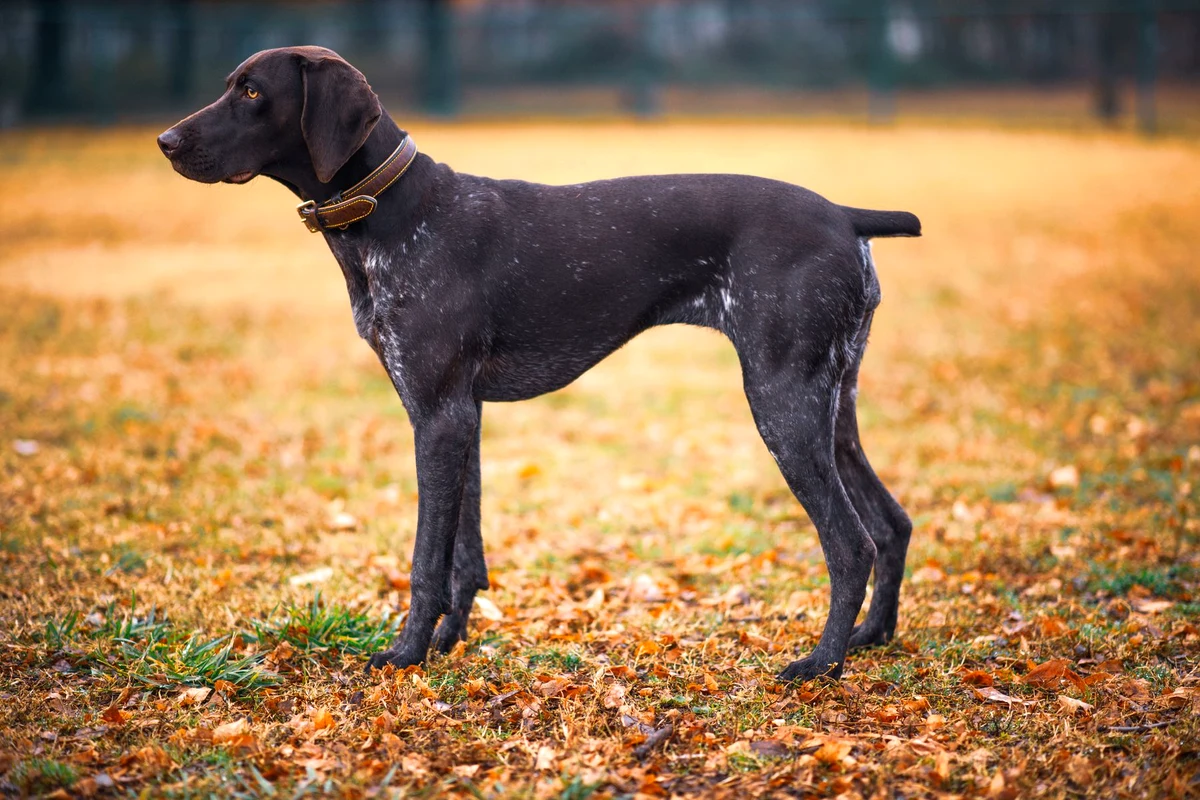
Dog Weight Chart by Size Class
Start here if your dog is a mix or you do not know the breed. Find the size class, then look at the last two columns, which turn the range into a number you can act on.
| Size class | Typical adult weight | Example breeds | Overweight begins around | Obese begins around |
|---|---|---|---|---|
| Toy | 4 to 12 lb | Chihuahua, Yorkshire Terrier, Pomeranian | +0.5 to 1 lb | +1 to 2.5 lb |
| Small | 12 to 25 lb | Pug, Boston Terrier, Shih Tzu | +1 to 2.5 lb | +2.5 to 5 lb |
| Medium | 25 to 50 lb | Beagle, Border Collie, Corgi | +2.5 to 5 lb | +5 to 10 lb |
| Large | 50 to 90 lb | Labrador Retriever, German Shepherd, Boxer | +5 to 9 lb | +10 to 18 lb |
| Giant | 90 to 175 lb | Great Dane, Newfoundland, Saint Bernard | +9 to 17 lb | +18 to 35 lb |
That last pair of columns is the part most owners miss. On a small dog, the entire margin between healthy and obese can be less than five pounds, which is why a few extra treats a day matters far more on a Pug than on a Great Dane.
RELATED: Can Dogs Eat Potatoes? What Every Dog Owner Should Know
Dog Weight Chart by Breed
These ranges follow the adult weights published in the American Kennel Club breed standards. Males usually sit at the top of the range and females toward the bottom.
| Breed | Male | Female |
|---|---|---|
| Chihuahua | up to 6 lb | up to 6 lb |
| Yorkshire Terrier | up to 7 lb | up to 7 lb |
| Shih Tzu | 9 to 16 lb | 9 to 16 lb |
| Pug | 14 to 18 lb | 14 to 18 lb |
| Cavalier King Charles Spaniel | 13 to 18 lb | 13 to 18 lb |
| Boston Terrier | 12 to 25 lb | 12 to 25 lb |
| French Bulldog | under 28 lb | under 28 lb |
| Beagle (15 inch) | 20 to 30 lb | 20 to 30 lb |
| Pembroke Welsh Corgi | up to 30 lb | up to 28 lb |
| Border Collie | 30 to 55 lb | 30 to 55 lb |
| Australian Shepherd | 50 to 65 lb | 40 to 55 lb |
| Siberian Husky | 45 to 60 lb | 35 to 50 lb |
| Bulldog | 50 lb | 40 lb |
| Golden Retriever | 65 to 75 lb | 55 to 65 lb |
| Labrador Retriever | 65 to 80 lb | 55 to 70 lb |
| Boxer | 65 to 80 lb | 50 to 65 lb |
| German Shepherd | 65 to 90 lb | 50 to 70 lb |
| Doberman Pinscher | 75 to 100 lb | 60 to 90 lb |
| Bernese Mountain Dog | 80 to 115 lb | 70 to 95 lb |
| Rottweiler | 95 to 135 lb | 80 to 100 lb |
| Newfoundland | 130 to 150 lb | 100 to 120 lb |
| Great Dane | 140 to 175 lb | 110 to 140 lb |
If your dog is a mix, do not average the parent breeds and treat that as gospel. Frame size varies enormously in mixed dogs, and a lanky 55 pound mutt and a stocky 55 pound mutt can be in completely different shape. Use the size class table as a rough sanity check, then rely on the hands-on assessment below.
RELATED: Overweight Cat? How to Tell and How to Help Them Slim Down Safely
Why the Dog Weight Chart Is Only Half the Answer
Here is the honest limitation of every chart on the internet, including this one. Breed standards describe show ring conformation, not your individual dog. A tall Labrador at 82 pounds can be perfectly lean while a short, stocky Labrador at 72 pounds is carrying real fat. The scale cannot tell the difference between muscle and fat, and it does not know your dog’s frame.
Veterinarians get around this with body condition scoring, a hands-on assessment that takes about thirty seconds and works on any dog regardless of breed. There are three checks.

1. The rib check
Lay your palms flat against both sides of your dog’s chest and run them backward with light pressure. According to the AKC, you should be able to feel each rib easily under a thin layer of covering, without pressing hard, and without seeing them clearly when your dog is standing still. A useful reference point: the ribs should feel roughly like the knuckles on the back of your hand when it rests flat on a table. If you have to dig to find them, there is too much fat over the top.
2. The overhead check
Stand over your dog and look straight down. You want a visible narrowing behind the ribcage, so the outline reads as a soft hourglass rather than a straight tube or an oval. No waist at all is one of the earliest and most reliable signs of excess weight.
3. The side profile check
Look at your dog from the side at their eye level. The belly should rise upward from the bottom of the ribcage toward the hind legs. That upward slope is called the abdominal tuck. If the underline runs flat and parallel to the ground, or sags below the ribcage, your dog is above their ideal weight regardless of what the chart says.
Body Condition Score Chart
Most veterinary practices use a nine point scale, where 4 to 5 is the target. A few use a five point scale where 3 is ideal, so always confirm which one your clinic is using before you panic about a number.
| Score (of 9) | What you feel | Waist from above | What to do |
|---|---|---|---|
| 1 to 3 | Ribs, spine, and hips obvious with no covering | Severely narrowed | See your vet, underweight can signal illness |
| 4 to 5 | Ribs easy to feel with a thin covering | Clear hourglass | Ideal, keep food and exercise as they are |
| 6 | Ribs felt with slight pressure | Barely visible | Trim portions about 10 percent and recheck in a month |
| 7 | Ribs hard to feel, noticeable fat over the back | Absent | Ask your vet for a structured weight loss plan |
| 8 to 9 | Ribs not findable, fat deposits on spine and tail base | Widened outward | Veterinary plan needed, health risk is significant |
How Common Is This, Really
Far more common than most owners think. The Association for Pet Obesity Prevention found in 2022 that 59 percent of dogs were classified as overweight or obese by their veterinarian. The more revealing number in the same survey: 36 percent of owners described their dog’s body condition as normal when the veterinary professional had scored that same dog as overweight to obese.
That gap is the real problem. Weight gain happens slowly enough that you stop noticing it on a dog you see every day. This is not a judgment on anyone, it is simply why the hands-on check matters more than your impression, and why photographing your dog from above every few months is a genuinely useful habit.
It is worth knowing what is at stake. VCA Animal Hospitals describes canine obesity as a chronic inflammatory condition that can shorten a dog’s life and raise the risk of diabetes, orthopedic problems, and cancer. Excess weight is not a cosmetic issue.
RELATED: Can Dogs Get Sunburn? Signs, Risks, and How to Protect Them
What to Do If Your Dog Is Over the Chart
Do not crash diet a dog. Rapid restriction is unsafe and rarely lasts. The AKC recommends a slow, vet-guided approach. A sensible starting sequence:
- Measure the food. Use an actual measuring cup, not a scoop or a coffee mug. Free pouring is the single most common cause of slow weight gain.
- Count the treats. Treats should stay under roughly 10 percent of daily calories. Table scraps and dental chews count, and on a small dog they add up fast.
- Read the label as a starting point, not a rule. Bag feeding guides are built around active adult dogs and often overshoot for a neutered, moderately active pet.
- Add movement gradually. Two extra short walks a day beats one long one, especially for a dog carrying extra weight on their joints.
- Weigh monthly, not daily. Aim for roughly 1 to 2 percent of body weight lost per week. Faster than that needs veterinary supervision.
- Rule out medical causes. Hypothyroidism and Cushing’s disease both cause weight gain that diet alone will not fix. If your dog is gaining despite honest portion control, that is a vet visit, not a willpower problem.
RELATED: Bringing Home a Rescue Dog: Your First-Week Survival Guide
Frequently Asked Questions
How accurate is a dog weight chart for mixed breeds?
Roughly accurate at the size class level and unreliable at the breed level. Mixed breed dogs vary widely in frame and build, so use the size class table to check you are in the right neighborhood, then rely on the rib, waist, and profile checks to judge the actual condition.
At what point is a dog considered overweight?
At about 10 percent above ideal body weight, and obese at more than 20 percent above. On a 25 pound dog that means overweight begins at roughly 27.5 pounds, which is a smaller margin than most owners expect.
How often should I weigh my dog?
Monthly is plenty for a healthy adult dog, and monthly is also the right interval during a weight loss plan. Most veterinary clinics let you use their lobby scale for free, which is more accurate than holding your dog on a bathroom scale, though the hold-and-subtract method works fine for small dogs.
Do puppies follow the same weight chart?
No. The ranges here are for adult dogs. Puppies are still growing, and large and giant breeds may not reach their adult weight until 18 to 24 months. Growing puppies should be assessed by your veterinarian against a breed-appropriate growth curve rather than an adult chart.
Does neutering change my dog’s ideal weight?
It does not change the ideal weight, but it does lower the calories needed to maintain it. Many dogs need a modest reduction in food after being spayed or neutered, which is a common reason for gradual gain in the year that follows.
The Bottom Line
Use the dog weight chart to find your starting range, then trust your hands over the number. If you can feel your dog’s ribs without pressing, see a waist from above, and see an upward tuck from the side, your dog is in good shape whatever the scale reads. If you cannot find any of the three, the number matters much less than the conversation you should be having with your veterinarian.
Author

Shopping for your pet on Amazon? New members can sign up for a free trial of Prime for fast free shipping and member-only deals, and cancel anytime.
Sign Up for a Free Trial of Prime


