


PRIME BIG DEAL DAYS IS OCTOBER 6 TO 7
Prime members get the sale prices, plus fast free shipping on food, litter, and pet gear. New to Prime? Try it free.
Start Your Free Prime TrialHow long do guinea pigs live? Most pet guinea pigs live 5 to 7 years, and VCA Animal Hospitals puts the typical range at 5 to 6 years, with some reaching 8 to 10. That is a long commitment for a small pet, and it is roughly triple what most people expect when they bring one home.
Here is the part almost nobody mentions. When researchers actually measured it, the real average came in lower. A 2025 survival analysis of British pet guinea pigs found a mean lifespan of just over four years. The gap between four years and eight years is not luck, and it is not breed. It is vitamin C, hay, space, and how quickly you notice something is wrong.
| Guinea Pig Situation | Lifespan | What It Means For You Today |
|---|---|---|
| Commonly quoted range | 5 to 7 years | Treat this as a target you have to earn, not a default |
| Measured UK veterinary average | 4.02 years | Assume you have less time than you expect and start good habits now |
| Middle half of that same study | 2.6 to 5.4 years | The spread is huge, and daily care is what moves you up it |
| Typical range with good care | 5 to 6 years | Unlimited hay plus daily vitamin C covers most of this gap |
| Upper end with excellent care | 8 to 10 years | Needs a companion, real floor space, and an exotics vet |
What the Real Data Says About How Long Guinea Pigs Live
In July 2025, researcher Fernando Mata published a survival analysis in PeerJ using VetCompass records for 675 guinea pigs receiving veterinary care in the UK. The measured average lifespan was 4.022 years, with a median of 4.025 years. The interquartile range ran from 2.563 to 5.447 years, meaning a quarter of these guinea pigs did not reach two and a half years old.
That number deserves some context before it scares you. These were animals already under veterinary care, and the study captures deaths from every cause, including accidents and illnesses that had nothing to do with husbandry. It is not a verdict on your guinea pig. What it does tell you is that the cheerful “5 to 7 years” you see repeated everywhere is the optimistic end of a very wide distribution, and plenty of guinea pigs land well below it.
The useful takeaway is not pessimism. It is urgency. The habits below are the ones that separate a three year guinea pig from a seven year one, and almost all of them cost very little.
RELATED: How Long Do Hamsters Live? Average Lifespan by Breed
Guinea Pig Life Stages and What to Do at Each One
Guinea pigs age quickly at both ends. Knowing which stage yours is in tells you what to watch for and when to change your routine.
| Age | Stage | What To Do At This Age |
|---|---|---|
| Under 4 months | Pup | Fastest growth of their life. Establish unlimited hay and daily vitamin C right now |
| 4 months to 1 year | Young adult | Start a weekly weigh-in and write the number down |
| 1 to 3 years | Prime adult | This weight is your baseline. Any unexplained drop from here is a warning sign |
| 3 to 5 years | Mature | Check teeth, feet, and coat once a month |
| Over 5 years | Senior | Move to twice yearly vet visits and check appetite every single day |
The weekly weigh-in is the single highest value habit on that table. A kitchen scale costs almost nothing, and weight loss is usually the first measurable sign of dental disease, which is one of the most common and most treatable problems in older guinea pigs. By the time a guinea pig looks thin, it has often been losing weight for weeks.
Vitamin C Is the One That Actually Kills Them
Guinea pigs share an unusual trait with humans and primates. They cannot manufacture their own vitamin C, so every milligram has to come from food. According to VCA Animal Hospitals, a guinea pig needs 10 to 50 mg of vitamin C per day depending on age, health, stress, and pregnancy.
Fall short over time and you get scurvy. Signs of vitamin C deficiency include a rough hair coat, reluctance to walk, swollen feet or joints, poor mobility, and bleeding or ulcers on the gums and skin. It is painful, it is progressive, and it is entirely preventable.
Two details trip up even careful owners:
- Pellets expire faster than you think. Vitamin C oxidizes rapidly, so guinea pig pellets should be used or replaced within 90 days of the manufacturing date. Check the date on the bag, not the day you opened it.
- Never put vitamin C in the water bottle. It breaks down quickly in water and loses potency, and you have no idea how much your guinea pig actually drank. Give supplements directly by mouth instead.
The easiest fix is food. Red and green bell peppers, parsley, cauliflower, and broccoli are all high in vitamin C. A slice of bell pepper daily is a genuinely effective habit, and most guinea pigs treat it like a reward.
Hay Is 75 Percent of the Job
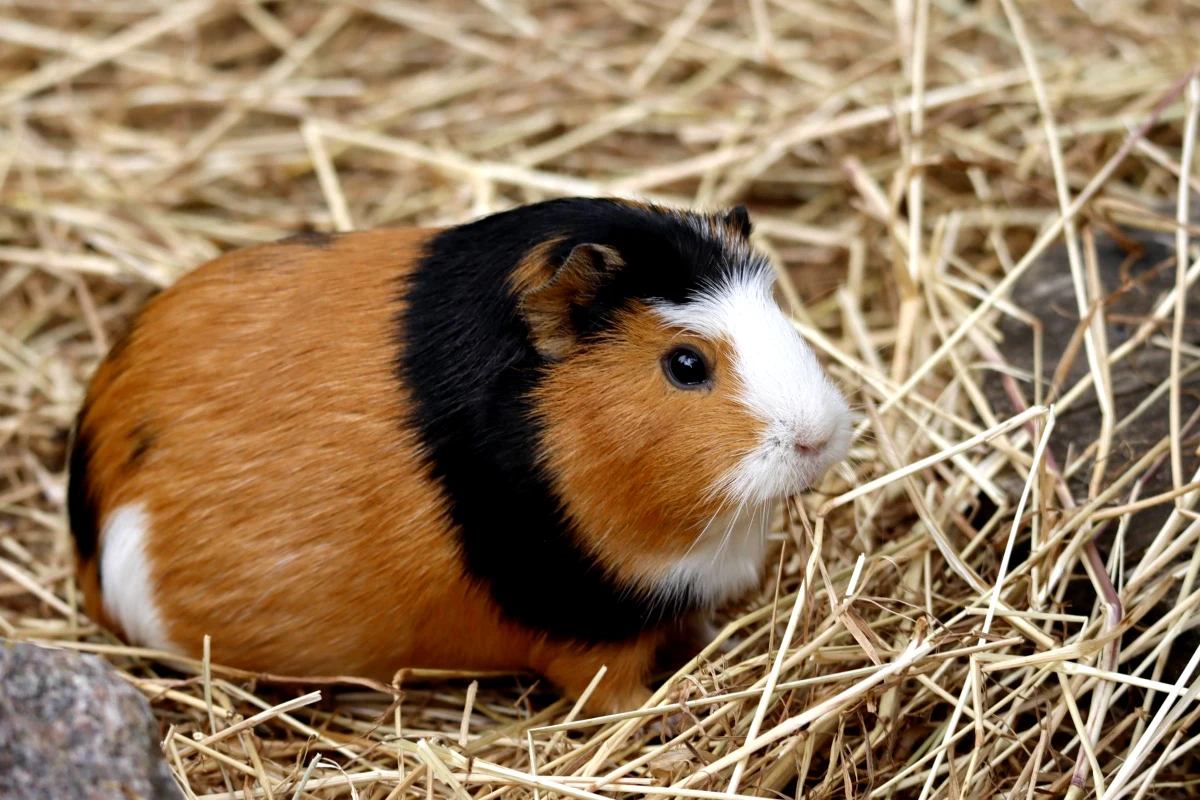
Hay is not bedding and it is not a snack. VCA recommends that good quality grass hay such as timothy or orchard grass make up 75 percent of what a guinea pig eats every day. Leafy greens and vitamin C rich vegetables account for about 20 percent, and timothy based pellets are the final 5 percent.
The reason hay matters so much for lifespan is dental. Guinea pig teeth grow continuously, and the side to side grinding of long stem hay is what keeps them worn down evenly. Without it, molars develop sharp points and spurs that cut into the tongue and cheek. The guinea pig then stops eating, loses weight, and needs anesthesia and dental work to fix a problem that unlimited hay would have prevented for free.
Practical version: hay should be available 24 hours a day, it should never run out, and it should be the most boring, most constant thing in the cage.
RELATED: What Do Rabbits Eat? A Complete Feeding Guide for Pet Rabbits
Space and Company Are Health Issues, Not Luxuries
VCA lists a minimum indoor cage of 24 by 36 inches for a guinea pig, and describes them as needing supervised time out of the cage every day to run and exercise. Treat that minimum as a floor, not a goal. Guinea pigs are active for up to 20 hours a day and only sleep in short bursts, so a cage they cannot move in is a cage they are awake in and frustrated in for most of their lives.
Companionship matters just as much. The RSPCA notes that guinea pigs are highly social and live in close family groups of five to ten in the wild. A guinea pig kept alone is missing something fundamental. Pairs work best in same sex combinations or with neutering, and introductions should be gradual and on neutral ground.
One temperature warning worth committing to memory. Guinea pigs handle heat badly. If yours gets supervised outdoor time, VCA advises the outdoor temperature should not exceed 78 degrees Fahrenheit, with shade and water always available. Heat stress can kill a guinea pig in a single afternoon.
Does Breed or Sex Change How Long Guinea Pigs Live?
This is where guinea pigs break the pattern you might expect from dogs. In the British survival study, no significant differences in longevity were found between sexes, between neutered and intact animals, or between breeds. Size and breed are strong lifespan predictors in dogs. In guinea pigs, based on this data, they largely are not.
That is genuinely good news, and it reframes the whole question. You cannot buy a longer lived guinea pig by picking an Abyssinian over an American or a sow over a boar. What you can do is control the diet, the space, the company, and how fast you react to symptoms. Almost all of the variance sits in your hands rather than in the animal’s genetics.
RELATED: Best Hamster Cage: 4 Cages Measured Against the 450 Square Inch Minimum
Warning Signs You Should Never Wait Out
Guinea pigs are prey animals and they hide illness well. By the time symptoms are obvious, things have usually been wrong for a while. Any of the following is a same week vet call, and the first three are same day:
- Not eating or not passing droppings. A guinea pig gut that stops moving is an emergency, not a wait and see.
- Laboured breathing or a crackling chest. Respiratory infections move fast in small animals.
- Sudden collapse, dragging limbs, or a head tilt.
- Steady weight loss across two or three weekly weigh-ins, which usually points at teeth.
- Drooling or a permanently wet chin, another classic dental sign.
- Swollen joints, limping, or a rough staring coat, which can indicate vitamin C deficiency.
- Lumps, scabs, or hair loss, which need identifying rather than watching.
Find an exotics or small mammal vet before you need one. Not every general practice is comfortable treating guinea pigs, and an emergency is the worst time to start searching.
Frequently Asked Questions
How long do guinea pigs live indoors versus outdoors?
Indoors, and it is not close. VCA advises keeping guinea pigs indoors, with supervised outdoor time only. Indoor housing removes predators, temperature extremes, and damp, all of which shorten outdoor lives. Outdoor time is valuable for UVB exposure and fresh grazing, but it should be supervised and it should be temporary.
What is the longest a guinea pig can live?
Well cared for guinea pigs occasionally reach 8 to 10 years. That is the realistic ceiling for a pet with excellent nutrition, a companion, proper space, and consistent veterinary care. Anything beyond that is exceptional rather than something to plan around.
Do guinea pigs live longer in pairs?
Social contact is a recognised welfare need rather than a proven lifespan extender, so there is no clean number attached to it. What is clear is that isolation causes chronic stress in a species that naturally lives in groups of five to ten, and chronically stressed animals are more vulnerable to illness. Pairs are also easier to monitor, because a guinea pig that suddenly stops interacting is showing you an early symptom.
Why did my guinea pig die so young?
The most common culprits are dental disease, gut stasis, respiratory infection, and undiagnosed vitamin C deficiency, and all four can progress quietly. Given that a quarter of the guinea pigs in the British study did not reach two and a half years, an early death is sadly common and very often not the owner’s fault.
How can I tell how old my guinea pig is?
There is no precise method for an adult. Vets estimate age from tooth wear, coat condition, weight, and the nails and feet, which coarsen with age. If you adopted an adult from a rescue, treat any age you were given as an estimate and focus on the weekly weight trend instead.
The Bottom Line
Most guinea pigs live 5 to 7 years, the measured British average is closer to four, and the difference between those two numbers is mostly things you control. Unlimited hay, daily vitamin C, a cage bigger than the minimum, a companion, and a weekly weigh-in will do more for your guinea pig’s lifespan than any breed choice or supplement.
Buy a cheap kitchen scale this week and write down the number. It is the earliest warning system you have, and it costs less than a bag of pellets.
Author

Shopping for your pet on Amazon? New members can sign up for a free trial of Prime for fast free shipping and member-only deals, and cancel anytime.
Sign Up for a Free Trial of Prime


