PRIME BIG DEAL DAYS IS OCTOBER 6 TO 7
Prime members get the sale prices, plus fast free shipping on food, litter, and pet gear. New to Prime? Try it free.
Start Your Free Prime TrialWhat do rabbits eat? The honest answer is grass hay, and a lot of it. A healthy pet rabbit’s daily diet should be roughly 80 percent grass hay, about 10 percent fresh leafy greens, around 5 percent pellets, and no more than 5 percent treats. That ratio comes from the House Rabbit Society, and it is the single most useful thing a new rabbit owner can memorize.
Most feeding mistakes come from flipping that pyramid upside down. Pellets and carrots are easy to hand over, hay looks like bedding, and the rabbit seems perfectly happy. But a rabbit’s gut and teeth are built to process coarse fiber all day long, and taking that fiber away is what leads to most of the health problems vets see in pet rabbits.
What Do Rabbits Eat Every Day? The Short Answer
Here is the whole diet in one list, in order of how much of it your rabbit should be eating:
- Unlimited grass hay (timothy, orchard, or brome), refreshed daily
- Fresh leafy greens, one to two cups per four pounds of body weight
- A small measured portion of plain pellets, not a full bowl
- Clean water, always available and changed daily
- Fruit and other treats, a bite or two once or twice a week at most
Notice that pellets sit fourth on that list, not first. A bowl of pellets left out all day is the most common reason pet rabbits become overweight and stop eating enough hay.
How Much to Feed by Rabbit Weight
Portions scale with body weight. The greens column follows the House Rabbit Society guideline of one to two cups per four pounds, and the pellet column follows the VCA Animal Hospitals guideline of roughly one eighth to one quarter cup per five pounds.
| Rabbit weight | Grass hay | Leafy greens per day | Timothy pellets per day |
|---|---|---|---|
| 4 lbs | Unlimited | 1 to 2 cups | About 1/8 cup |
| 6 lbs | Unlimited | 1.5 to 3 cups | 1/8 to 1/4 cup |
| 8 lbs | Unlimited | 2 to 4 cups | 1/4 to 1/3 cup |
| 10 lbs | Unlimited | 2.5 to 5 cups | 1/4 to 1/2 cup |
Treat the pellet column as a ceiling, not a target. Many adult rabbits eating good hay and a generous salad do fine at the low end.
RELATED: 51 Rabbit Names Inspired by Famous Gardens
Hay: About 80 Percent of the Diet
If you only get one thing right, get hay right. Unlimited high quality grass hay should make up the bulk of what your rabbit eats, and it needs to be available every hour of the day, not offered as a meal.
Hay does two jobs no other food can. The long coarse fiber keeps food moving through the digestive tract, which helps prevent gastrointestinal stasis, a genuinely dangerous condition where the gut slows or stops. And the side to side grinding motion of chewing hay wears down teeth that never stop growing. Rabbits that live on soft pellets and greens alone are the ones who end up needing dental work.
Which Hays Are Best
- Timothy hay is the default choice, widely available and well balanced
- Orchard grass is softer and sweeter, useful for a picky rabbit or an owner with a timothy allergy
- Brome and meadow hay work well and add variety
- Oat hay is fine mixed in, though many rabbits pick out the seed heads and leave the stalks
Good hay smells fresh and green and still has long stems. If it is dusty, brown, or crumbles to powder, your rabbit will refuse it and they are right to.
Why Alfalfa Is for Babies Only
Alfalfa is a legume, not a grass, and it is much higher in protein and calcium. That suits a growing rabbit under about seven months old. For an adult, VCA notes that alfalfa is too rich in both, and long term it contributes to weight gain and urinary problems. Switch to a grass hay as your rabbit matures.
Leafy Greens: About 10 Percent
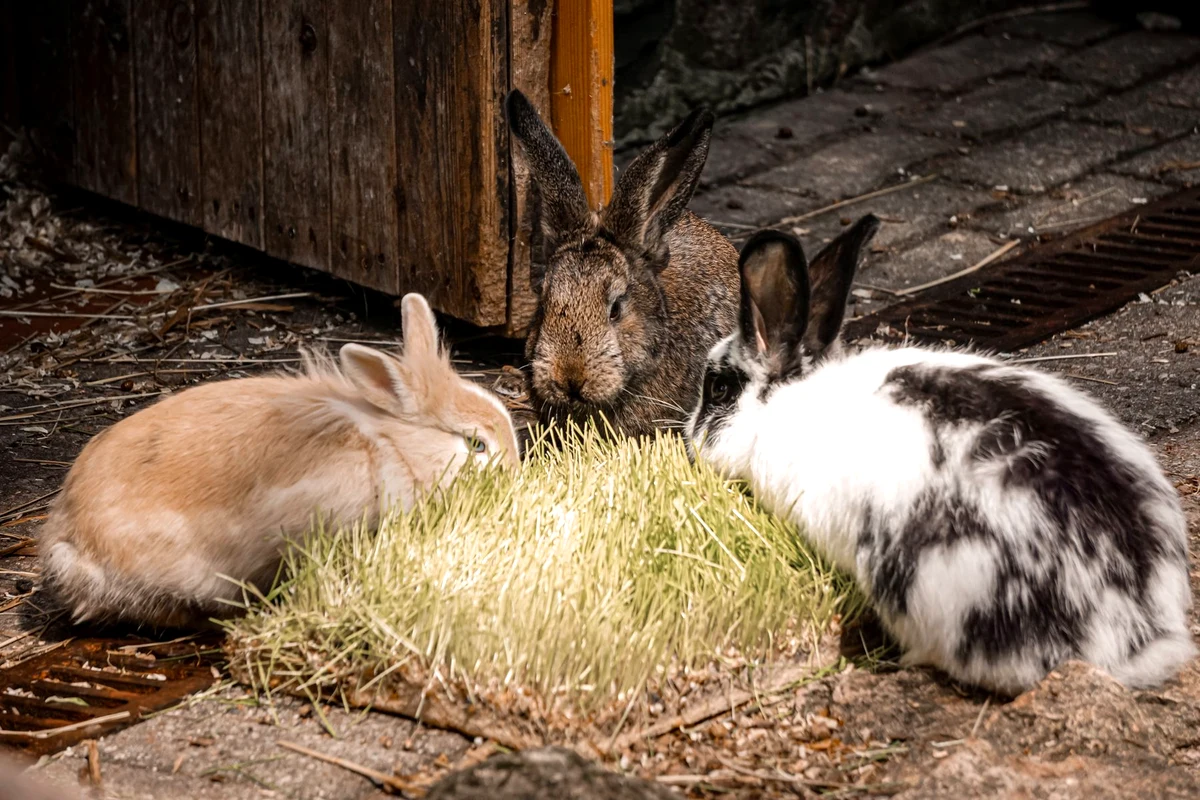
Fresh greens are where your rabbit gets variety, moisture, and most of the enjoyment of eating. Aim for one to two cups per four pounds of body weight daily, and rotate three to five different greens rather than serving the same one every day.
Good Greens to Rotate
- Romaine and other dark leaf lettuces
- Cilantro, parsley, basil, mint, and dill
- Carrot tops and radish tops
- Endive and escarole
- Collard, mustard, turnip, and dandelion greens
- Broccoli leaves and small amounts of the stems
- Bok choy and celery leaves
Greens to Serve Sparingly
Kale, spinach, beet greens, and Swiss chard are safe in rotation but higher in oxalates and calcium, so the House Rabbit Society advises using them sparingly rather than as the daily base of the salad. Build the salad on romaine and herbs, then treat those four as guest stars.
How to Introduce a New Green
Add one new green at a time and wait a full 24 hours before adding another. If you see soft stool or gas, you know exactly which food caused it. Introducing four new vegetables at once tells you nothing except that something disagreed.
RELATED: Do Guinea Pigs Like to Be Held? Handling and Bonding Tips
Pellets: A Small Measured Portion
Pellets are a supplement, not a meal. Choose a plain timothy based pellet with no seeds, no dried fruit, no corn, and no colorful bits. Those muesli style mixes let a rabbit pick out the sugary pieces and leave the fiber behind, which defeats the entire point.
Measure the portion into a small bowl once a day rather than topping it up. If your rabbit finishes pellets in minutes and then ignores the hay rack all afternoon, cut the pellets back, not the hay.
When you switch brands, mix a little of the new pellet into the old and increase the proportion over several days. An abrupt change can upset a rabbit’s digestion.
Fruit and Treats: Under 5 Percent
All fruit counts as a treat because of the sugar. A thin slice of banana, a couple of blueberries, or a small piece of apple with the seeds removed is plenty, once or twice a week. Rabbits will absolutely learn to beg for it, and that is not a reason to give more.
Carrots belong in this category too, which surprises people. A whole carrot is a sugary root vegetable, not a staple. Carrot tops, on the other hand, are a leafy green and can go in the daily salad.
Skip commercial yogurt drops and seed sticks entirely. They exist because they sell, not because rabbits need them.
Foods Rabbits Should Never Eat
Some foods are dangerous and others are simply wrong for a hindgut fermenter. The House Rabbit Society’s do not feed list includes:
- Iceberg lettuce, which is mostly water and offers almost no nutrition
- Nuts and seeds
- Beans and other legumes
- Potatoes
- Onion and garlic
- Bread, crackers, and popcorn
- Yogurt and any dairy
- Chocolate
- Rhubarb
Add to that anything sugary or processed meant for people, plus grass clippings from a mower, which ferment quickly and can cause serious digestive upset. Fresh picked grass from an untreated lawn is fine. Clippings sitting in a bag are not.
What Do Wild Rabbits Eat?
Wild rabbits eat almost exactly what the ratio above suggests, which is why the ratio works. Through the growing season they graze on grasses, clover, weeds, wildflowers, and whatever tender leaves they can reach. In winter, when green growth disappears, they shift to woody material: twigs, buds, bark, and dried stems.
What they almost never eat is concentrated starch or sugar. There are no pellet dispensers or banana trees in a meadow. That is the useful takeaway for pet owners: the closer your rabbit’s diet sits to endless coarse plant fiber, the closer it sits to what the animal evolved to digest.
One important note if you find a wild rabbit: do not try to feed it pet rabbit food or greens from your fridge. Wild kits have very specific needs and the right move is to contact a licensed wildlife rehabilitator.
RELATED: How Long Do Hamsters Live? Average Lifespan by Breed
Water Matters as Much as Food
Fresh water should be available at all times and changed daily. Many rabbits drink noticeably more from a heavy ceramic bowl than from a sipper bottle, simply because a bowl lets them take a proper drink instead of licking. If you use a bottle, check the nozzle every day, since a stuck ball bearing can leave a rabbit without water for hours.
Dehydration and low fiber are the two biggest contributors to gut slowdowns, and they often happen together. A rabbit drinking well and eating hay all day is a rabbit with a working digestive system.
Frequently Asked Questions
How much hay should a rabbit eat per day?
As much as it wants. A useful visual benchmark is a pile roughly the size of your rabbit’s body, refreshed every day. If the rack is empty by evening, add more. You cannot overfeed grass hay.
Can rabbits eat carrots every day?
No. Carrots are high in sugar and belong in the treat category, so a small piece once or twice a week is the right frequency. Carrot tops are different and can be part of the daily leafy green salad.
What can I feed a rabbit if I run out of pellets?
Nothing needs to replace them for a day or two. An adult rabbit with unlimited grass hay, a normal salad of leafy greens, and fresh water is perfectly fine while you restock. Do not substitute human cereal, bread, or another animal’s food.
Do baby rabbits eat the same diet as adults?
Not quite. Rabbits under roughly seven months can have alfalfa hay and alfalfa based pellets for the extra protein and calcium they need to grow, and pellets are usually offered more freely. Around that age you transition to grass hay and start measuring pellets.
Why is my rabbit not eating its hay?
Usually the hay is stale or the rabbit is too full of pellets and treats. Try a fresh bag or a different grass hay first, and cut the pellet portion. If your rabbit stops eating altogether, drools, or produces no droppings, that is an emergency and needs a vet the same day.
The Bottom Line
What do rabbits eat? Hay first, greens second, a measured spoon of pellets third, and treats almost never. Get that order right and you have handled the single biggest factor in your rabbit’s digestive health, dental health, and weight. Everything else is refinement.
Author

Shopping for your pet on Amazon? New members can sign up for a free trial of Prime for fast free shipping and member-only deals, and cancel anytime.
Sign Up for a Free Trial of Prime